GTA VI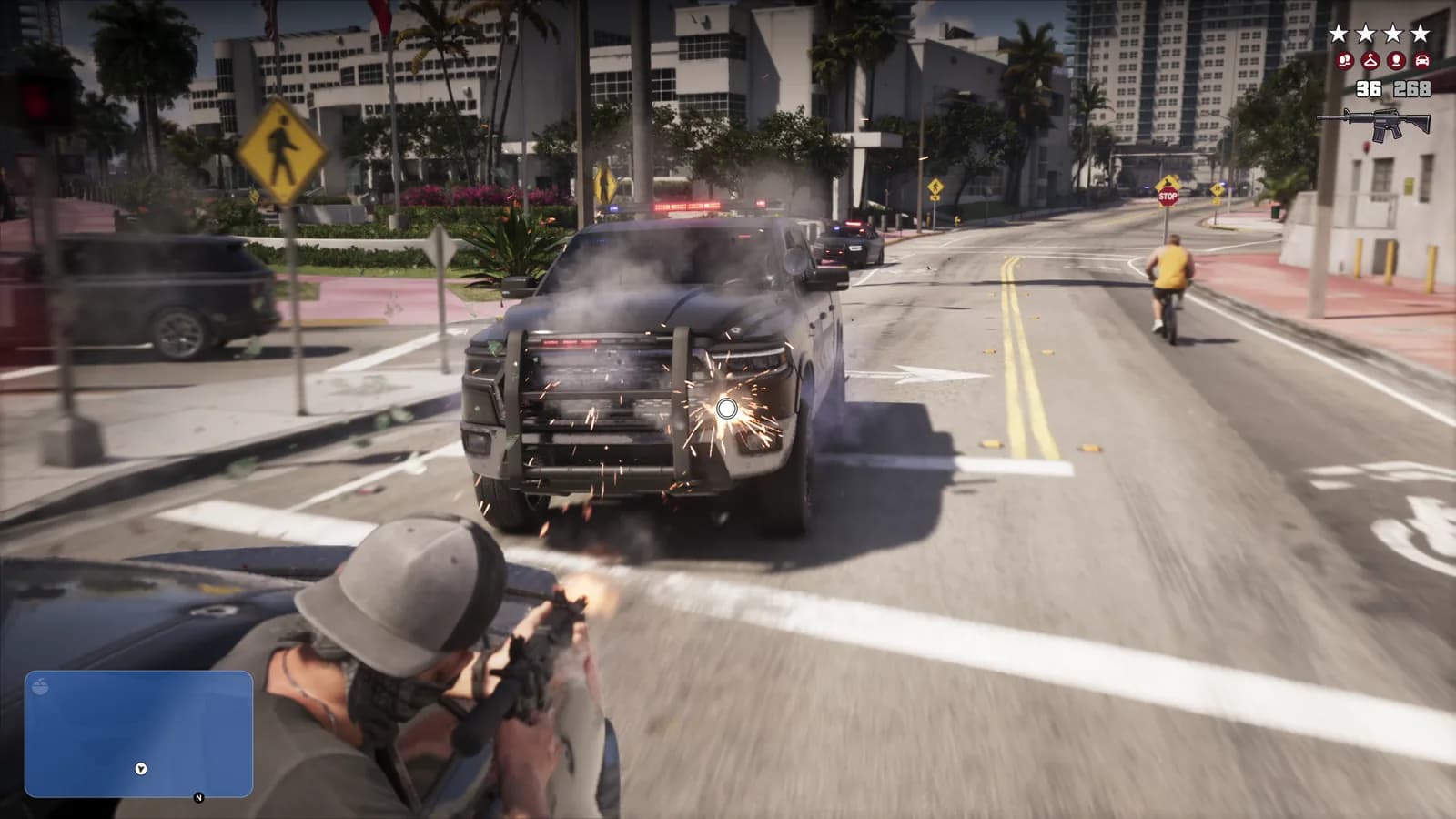
Gameplay guide
GTA 6 Wanted System Explained: Six Stars, Police Recognition and Evidence
What GTA 6’s Extended Look confirms about the six-slot wanted scale, police recognition, evidence status, search areas and getaway tactics.
Overview
What this guide is for
GTA 6’s police system looks more readable and more situational than a simple row of stars. In the official Extended Look, the HUD exposes a six-slot wanted scale, recognition and evidence status, while chases show vehicle swaps and abandoned getaway cars. Here is what the footage confirms — and what Rockstar has not explained yet.
Six wanted stars are visible, but the rules remain unknown
The store robbery sequence clearly displays six star-shaped slots. That is direct visual evidence that GTA VI can represent a six-level wanted scale; it does not, by itself, reveal which agencies or units arrive at each level.
Treat claims about the return of military pursuit or a specific six-star response as unconfirmed until Rockstar documents them or the final game shows them.
Recognition, evidence and the search area
During the vehicle chase, the interface communicates whether police can recognize the suspects and whether evidence is associated with the crime. The minimap also draws a search zone rather than treating every officer as permanently omniscient.
That points to a system where breaking sight, changing circumstances and leaving the search area matter. The footage does not establish how long recognition lasts or which actions erase evidence.
Why getaway cars and vehicle swaps may matter
The presentation repeatedly connects robberies to preparation: masks, a getaway vehicle, a chase and then a burning car left behind. This suggests the escape is a sequence to manage, not only a sprint until the stars disappear.
For the broader robbery flow, see our guide to disguises and getaway cars. Every relevant frame is also indexed in the Extended Look frame archive.
Sources and verification
We distinguish what is visible in the footage from Rockstar statements and from our interpretation. The video remains the primary source for interface details.